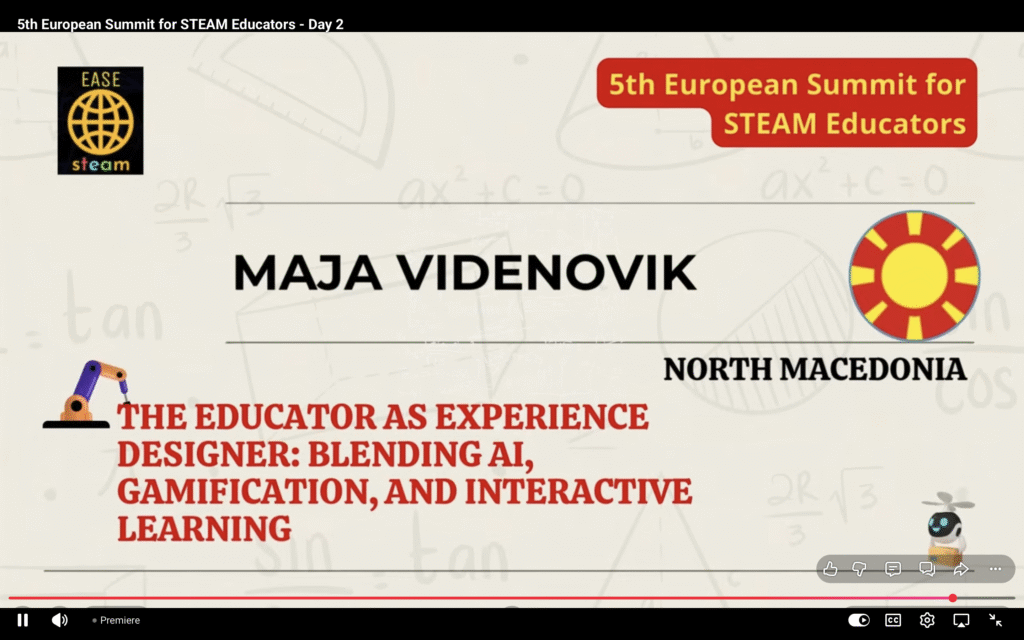
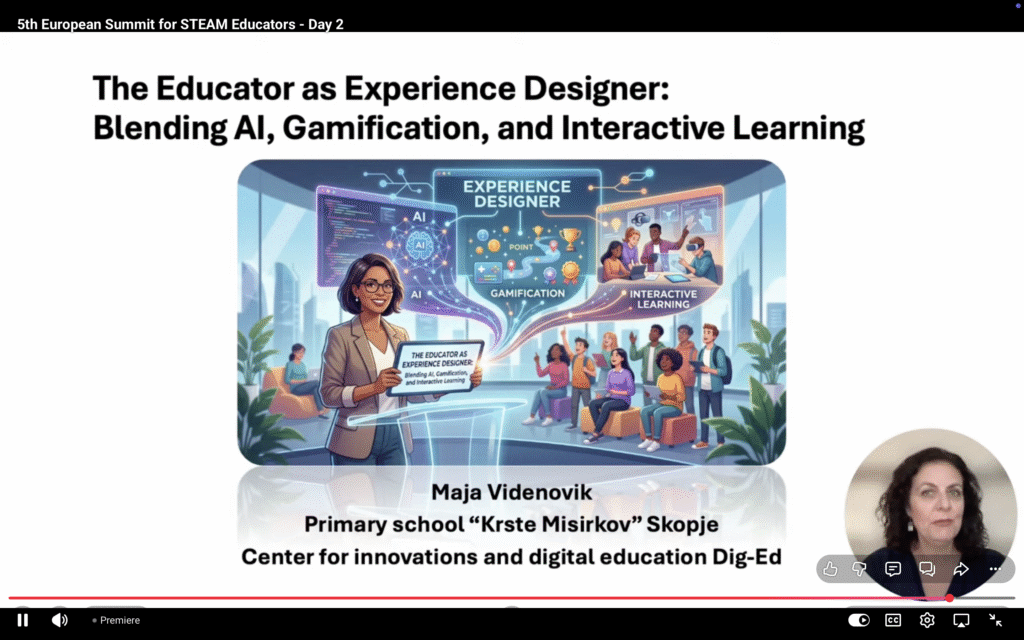
From technology user to designer of interactive and motivating learning environments – how is the role of the educator evolving in the age of artificial intelligence? This question was at the heart of the presentation “The Educator as Experience Designer: Blending AI, Gamification, and Interactive Learning” delivered by Maja Videnovik from the Center for Innovations and Digital Education Dig-Ed at the 5th European Summit for STEAM Educators (EASE Summit), held online on 11–12 September 2026.
The rapid development of artificial intelligence and other emerging technologies is creating new possibilities for education, but it is also changing the competences educators need. Simply knowing how to use digital tools is no longer enough. Educators increasingly need to make informed pedagogical decisions about when, why and how technology should be integrated into learning.
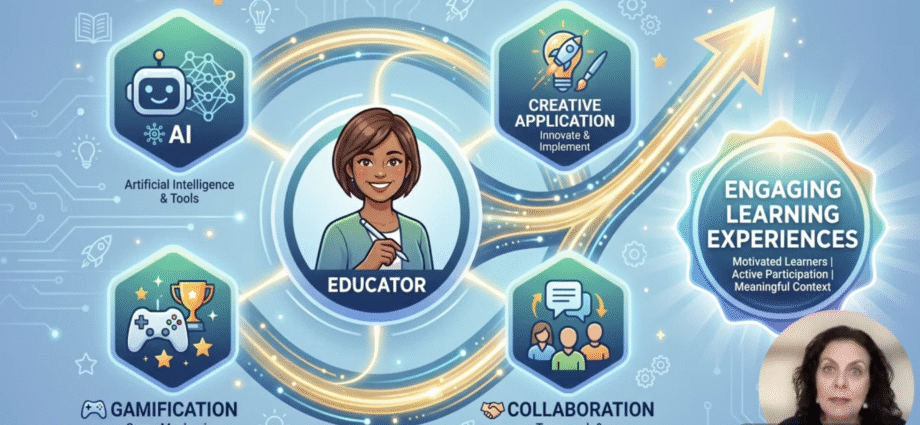
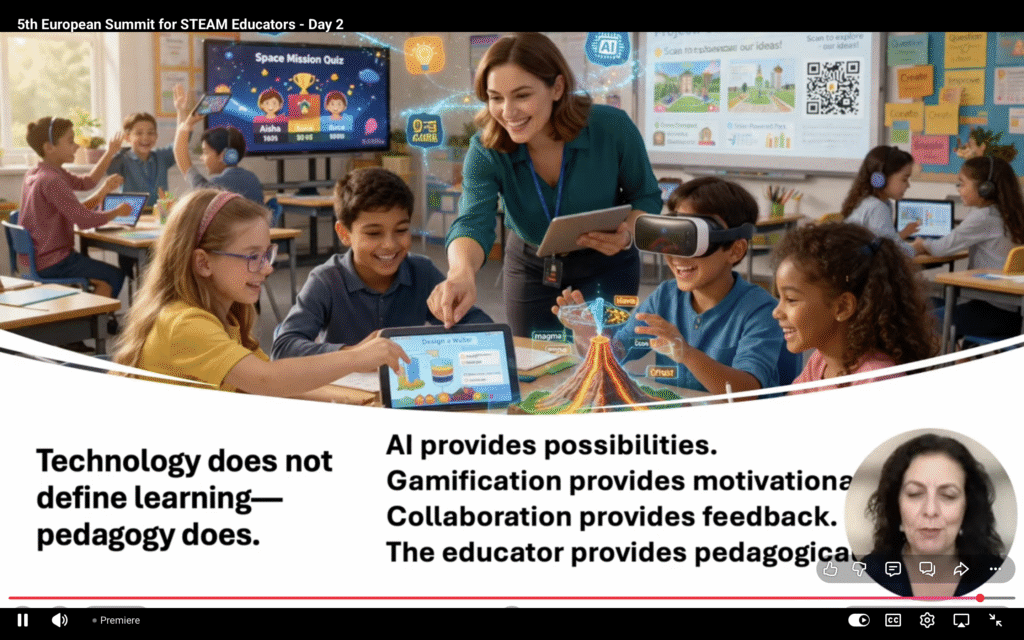
The presentation highlighted the idea that educators are gradually moving from being primarily users of technology towards becoming designers of learning experiences. Starting from the needs, interests and abilities of their learners, educators can select and combine different technologies, teaching strategies and motivational approaches to create learning environments that encourage curiosity, active participation, collaboration and meaningful learning.
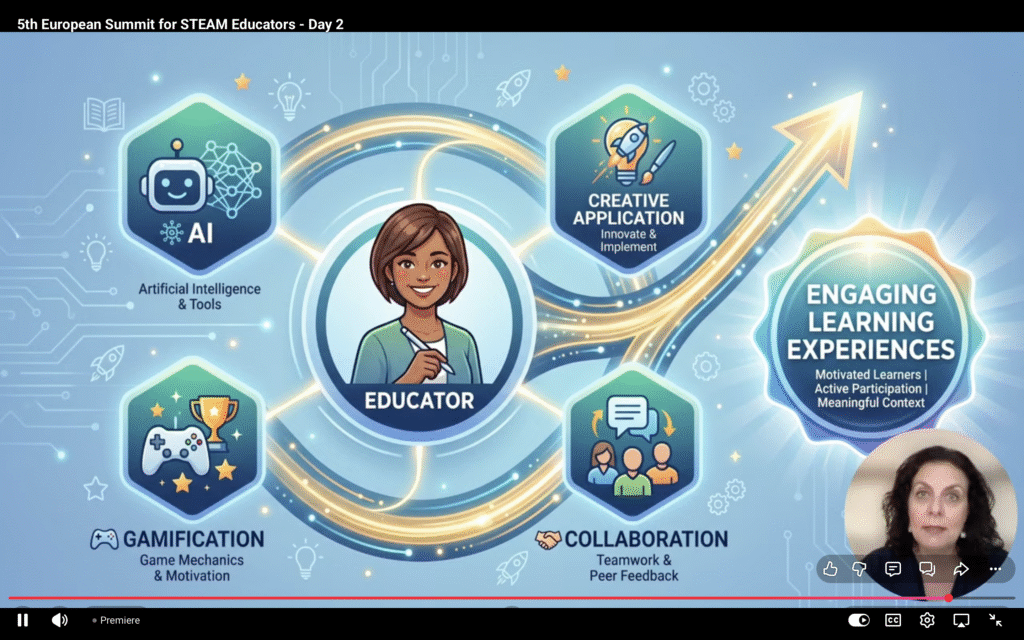
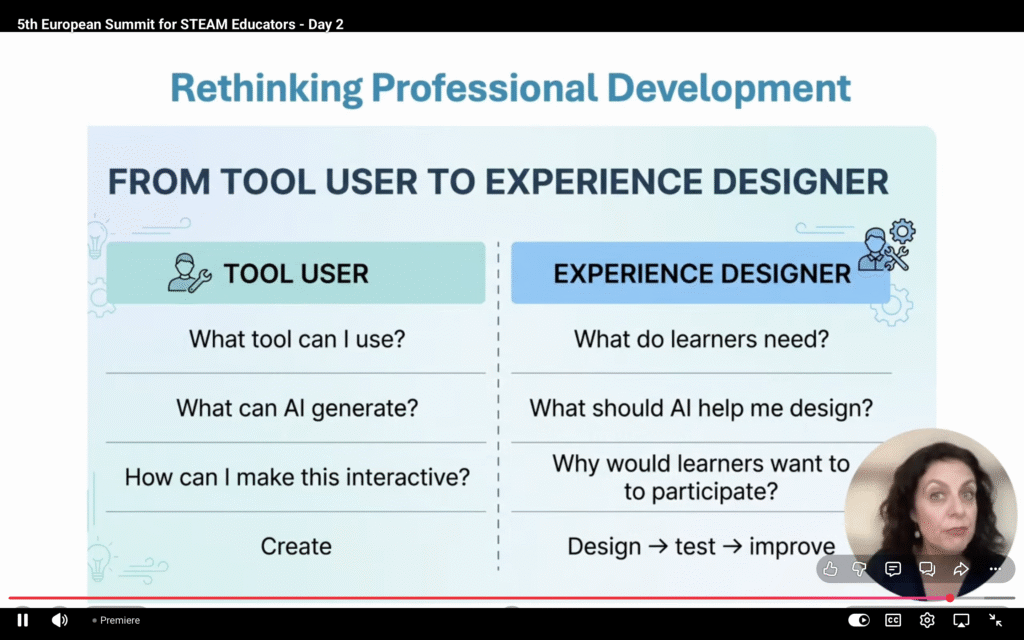
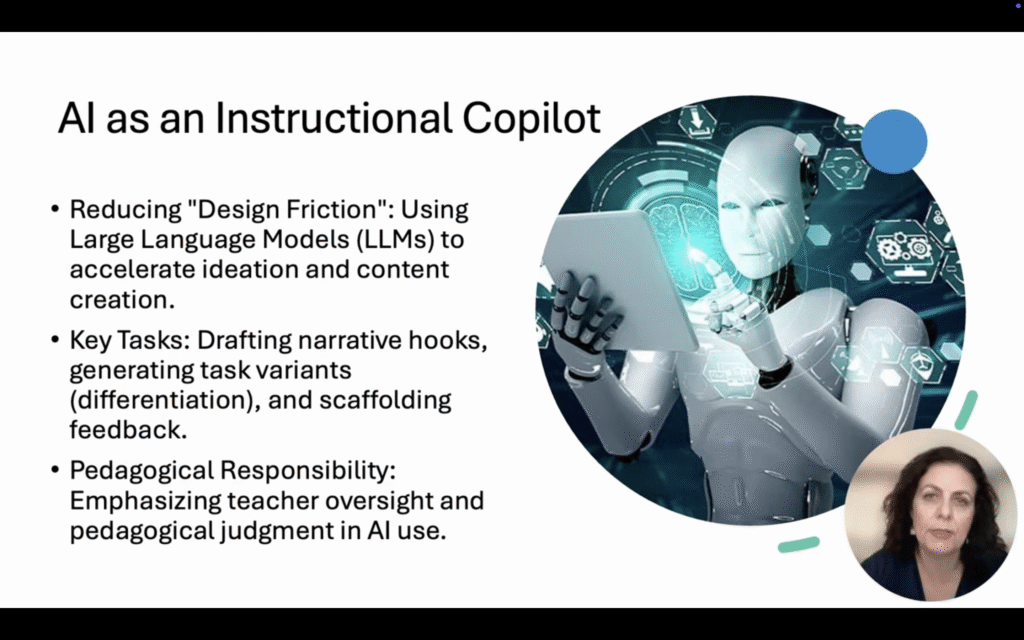
Particular attention was given to the potential of combining artificial intelligence, gamification and interactive learning approaches. Rather than treating these as separate innovations, they can complement one another when they are integrated with a clear pedagogical purpose. Artificial intelligence can support the development and adaptation of learning content and scenarios, while gamification and motivational design can contribute to creating challenges, narratives and experiences that encourage learners to become more actively involved in the learning process.
Drawing on practical experiences from working with educators, the presentation demonstrated how this combination can support teachers in moving beyond the simple use of digital tools towards the thoughtful design of engaging and learner-centred experiences. The emphasis was not on using technology because it is new or innovative, but on selecting and adapting it according to clearly identified learning needs and intended outcomes.
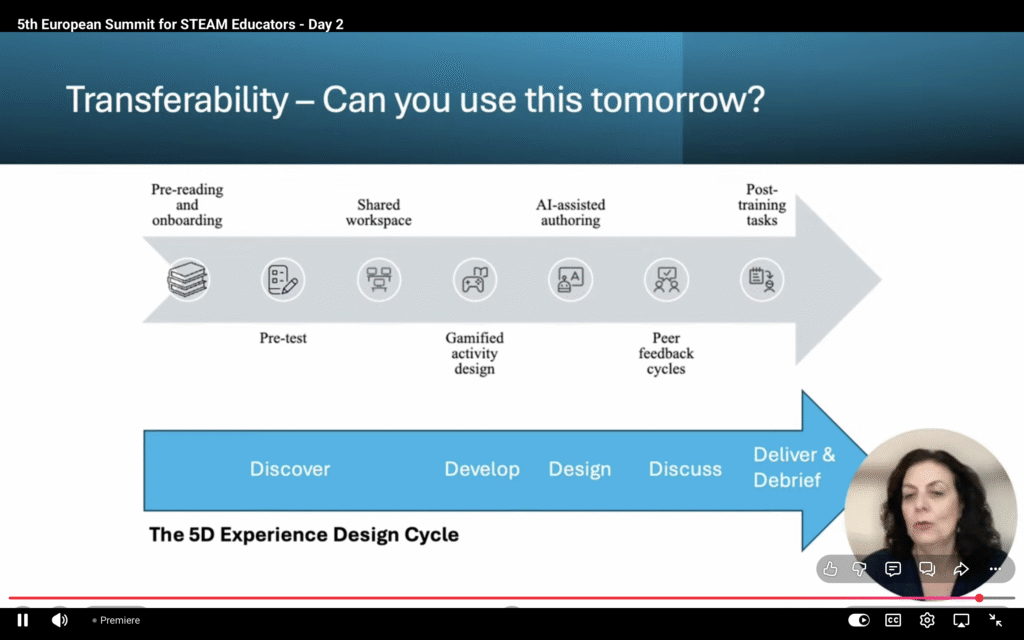
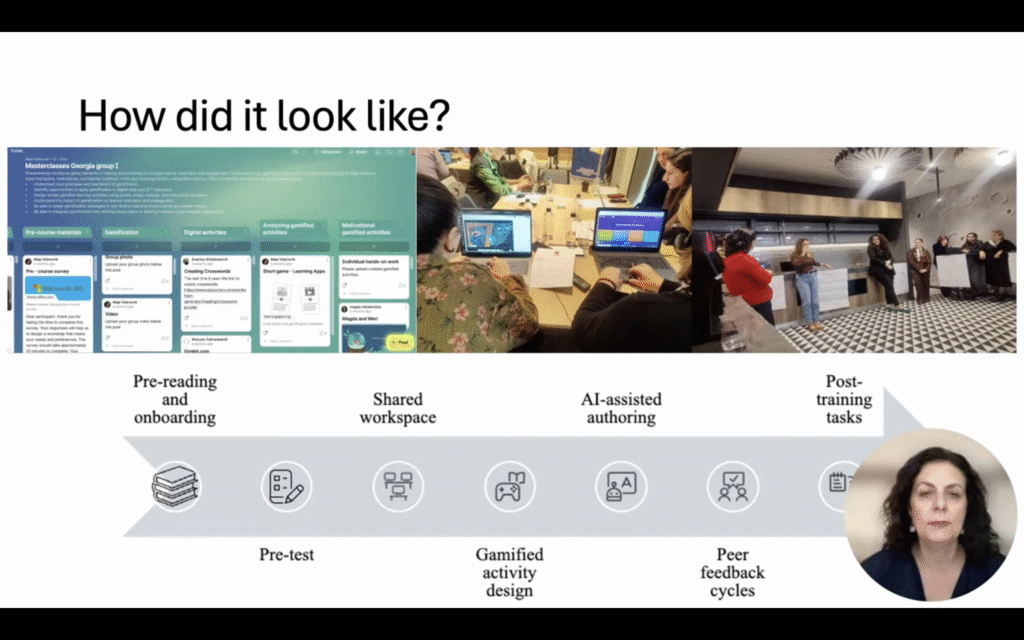
An important part of this approach is also the changing relationship between educators and artificial intelligence. AI can provide new opportunities for generating ideas, developing learning resources, creating scenarios and adapting activities, but the educator remains the key pedagogical decision-maker. Human judgement, knowledge of learners and understanding of the educational context remain essential for determining whether and how AI-generated ideas should become part of the learning experience.
The 5th European Summit for STEAM Educators was also a valuable opportunity to exchange experiences and ideas with STEAM educators from different countries. Presentations offered different perspectives on innovation in education and created space for reflection on the opportunities and challenges that accompany the growing presence of digital technologies and AI in teaching and learning.
For Dig-Ed, participation in such European events provides an important opportunity not only to share experiences and practices developed through our work, but also to learn from other educators, establish new connections and bring new ideas into future activities with teachers and learners.